

Physical and virtual servers
Protect Microsoft Windows, Linux, VMware, and Hyper-V environments with DPX backup and recovery for core agency workloads.
Government data protection

Government infrastructure spans old and new systems: physical servers, Microsoft and Linux workloads, VMware, Hyper-V, and Proxmox VE, NAS platforms, Oracle and Microsoft applications, Kubernetes clusters, and edge locations. A ransomware incident, accidental deletion, storage failure, or regional outage can interrupt citizen services, public safety workflows, records access, courts, education, finance, and internal operations. Catalogic focuses on the operational side of resilience: reliable backup jobs, protected recovery points, validated restores, and multiple recovery paths.
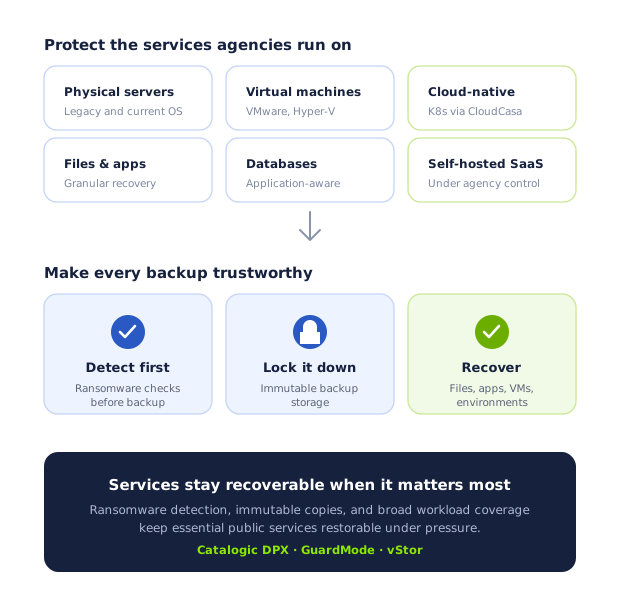
Use Catalogic to cover the systems that agencies already run and the platforms they are adopting next.
Protect Microsoft Windows, Linux, VMware, and Hyper-V environments with DPX backup and recovery for core agency workloads.
Support critical application recovery patterns for Microsoft SQL Server, Exchange, SharePoint, Oracle Database, SAP HANA, SAP R/3, and other supported enterprise applications.
Use DPX for NAS and file protection, including NDMP workflows where required for large-scale file environments.
Use CloudCasa to protect Kubernetes resources, persistent volumes, namespaces, and application configurations across on-premises, cloud, and hybrid environments.
Protect VMs running on KubeVirt-based platforms, including Red Hat OpenShift Virtualization and SUSE Virtualization.
Use flexible backup storage and replication patterns to protect smaller locations without forcing appliance-heavy deployments.
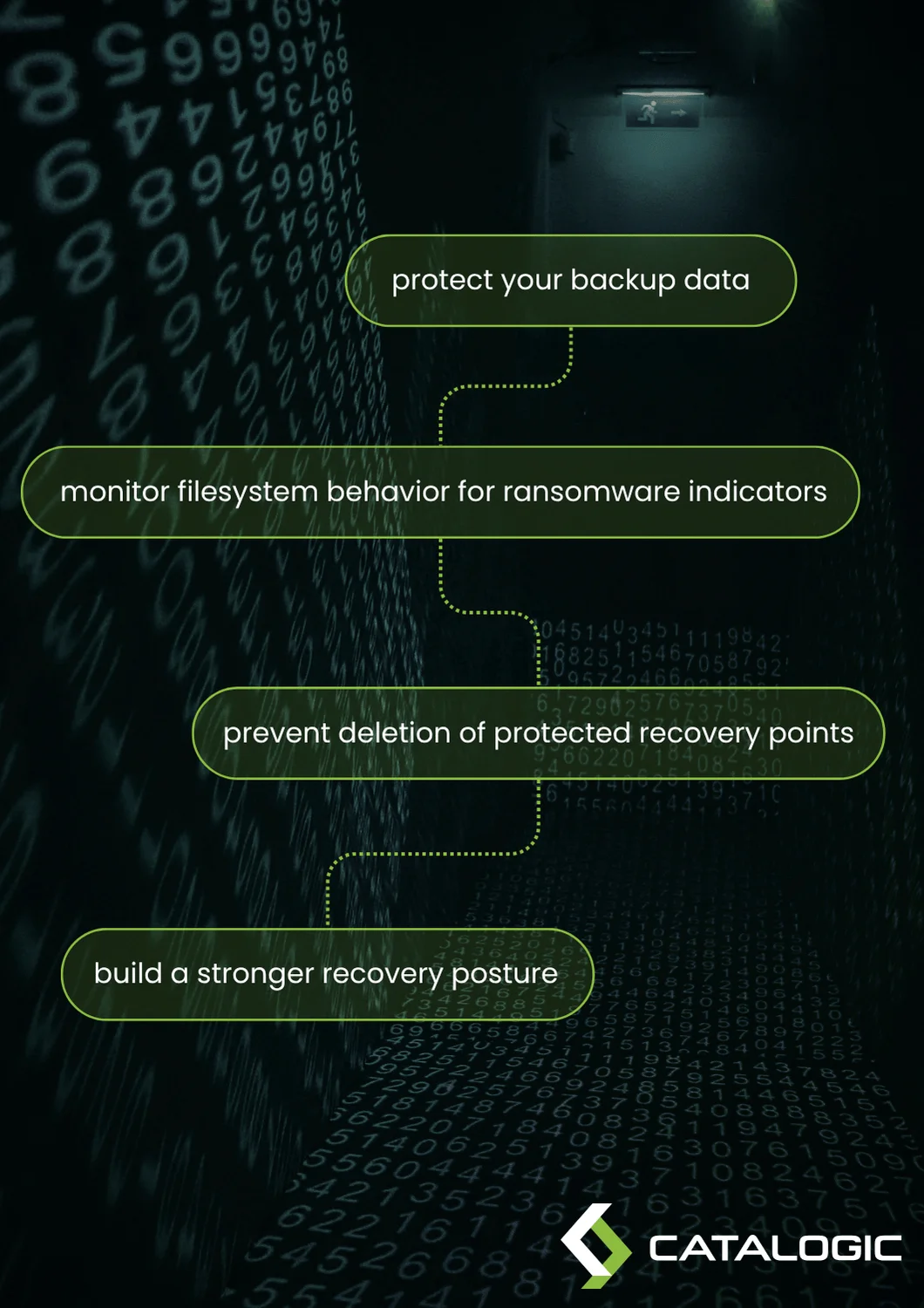
Backups are a recovery asset only if they survive the incident. DPX, vStor, and GuardMode help agencies build a stronger recovery posture by combining backup, immutable storage, anomaly detection, and clean recovery workflows. vStor provides software-defined backup storage with immutability controls that help prevent unauthorized or accidental deletion of protected recovery points. GuardMode monitors filesystem behavior for ransomware indicators, including suspicious extensions, rapid renames, unusual modification patterns, decoy file changes, and high-entropy files. DPX also supports backup verification and malware-aware recovery workflows so teams can reduce the risk of restoring compromised data.
Use DPX for the systems that still run the agency: physical servers, virtual machines, databases, NAS, file systems, and application workloads. DPX is designed for reliable backup, rapid recovery, granular restores, bare metal recovery, cloud archive, tape or tape replacement, and remote office protection.
Use CloudCasa for Kubernetes, KubeVirt, OpenShift Virtualization, SUSE Virtualization, and cloud-native application recovery. CloudCasa supports multi-cluster operations, centralized policy management, migration, replication, persistent volume backup, file-level recovery, and self-hosted deployments for agencies that need control over infrastructure and data location.
Government IT teams are measured on continuity, auditability, cost control, and the ability to recover under pressure. Catalogic is designed around those operational outcomes rather than generic backup features.
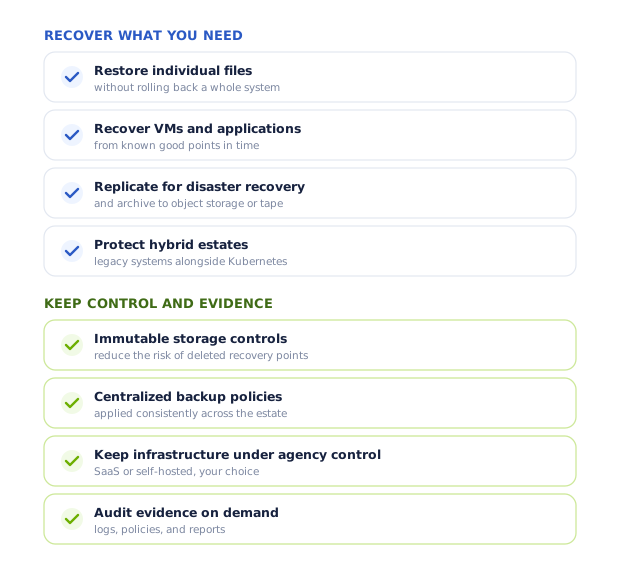
Use this section to identify the right Catalogic fit for your environment. Always validate specific compliance obligations with Catalogic and your internal governance teams.
| Environment | Recommended Catalogic fit | Why it matters |
|---|---|---|
| State and local government | DPX plus vStor | Protect mixed infrastructure with cost-sensitive backup storage and recovery workflows. |
| Public safety and justice | DPX, vStor, GuardMode | Preserve access to records, case systems, file shares, and application data during cyber incidents. |
| Public education and research | DPX plus CloudCasa | Protect campus systems, virtual environments, Kubernetes platforms, and distributed data. |
| Federal and defense-adjacent organizations | DPX plus CloudCasa self-hosted | Support controlled deployments, self-managed backup infrastructure, and isolated environments. |
| Public cloud and Kubernetes teams | CloudCasa | Protect clusters, persistent volumes, KubeVirt VMs, and application configurations across hybrid and cloud environments. |
| Agencies with NAS-heavy estates | DPX | Support NDMP and large file protection workflows with modern web management. |
Catalogic products support your compliance program but do not make an agency compliant on their own. Validate specific requirements such as FedRAMP, FIPS, CJIS, or StateRAMP with Catalogic and your internal governance teams.
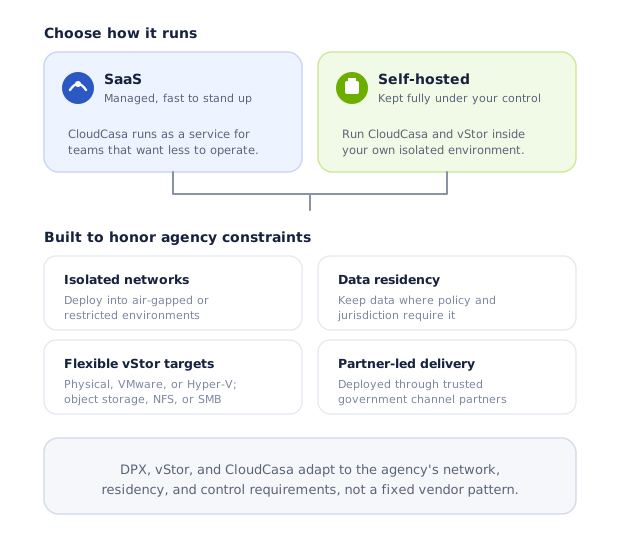
Government environments vary widely. Some teams can consume SaaS. Others require self-hosted platforms, isolated networks, strict data residency, private storage, or procurement through established public sector channels. DPX runs as enterprise backup software with vStor as a software-defined backup target that can be deployed on physical machines, VMware, or Hyper-V. CloudCasa is available as SaaS and self-hosted for Kubernetes cloud-native environments where agencies need greater control over platform operation and data location.
Resources covering resilience, ransomware recovery, and broad workload coverage for public sector IT teams.
Overview of DPX backup and recovery capabilities, including rapid recovery, ransomware protection, cloud integration, bare metal recovery, and remote office backup.
How GuardMode detects ransomware indicators and flags compromised data before it becomes the next backup copy.
Kubernetes-native backup, migration, DR, and VM protection for self-managed environments, including regulated and air-gapped use cases.
Software-defined immutable snapshots, deletion lock controls, and MFA-protected recovery points for ransomware-resilient backup.
Catalogic helps government IT teams protect enterprise workloads, Kubernetes platforms, backup storage, and recovery workflows with flexible deployment options and practical cyber resilience controls.
Request a Demo