


Air gap
Once exported and stored offline, tape creates a physical separation that online attackers cannot directly modify.
DPX use case

Many organizations still rely on tape because it solves problems that disk and cloud do not always solve cleanly: offline isolation, long shelf life, predictable media rotation, and cost-effective retention. DPX supports tape libraries, virtual tape libraries, standalone tape devices, tape media pools, and tape restore workflows. The documentation defines a tape library as a hardware unit with multiple physical or virtual drives, tape slots, and a media changer, and DPX treats VTL devices like regular tape libraries. That lets teams keep existing tape investments while modernizing the rest of the backup environment.
DPX tape support gives backup teams practical ways to keep protected data outside the normal production attack surface:
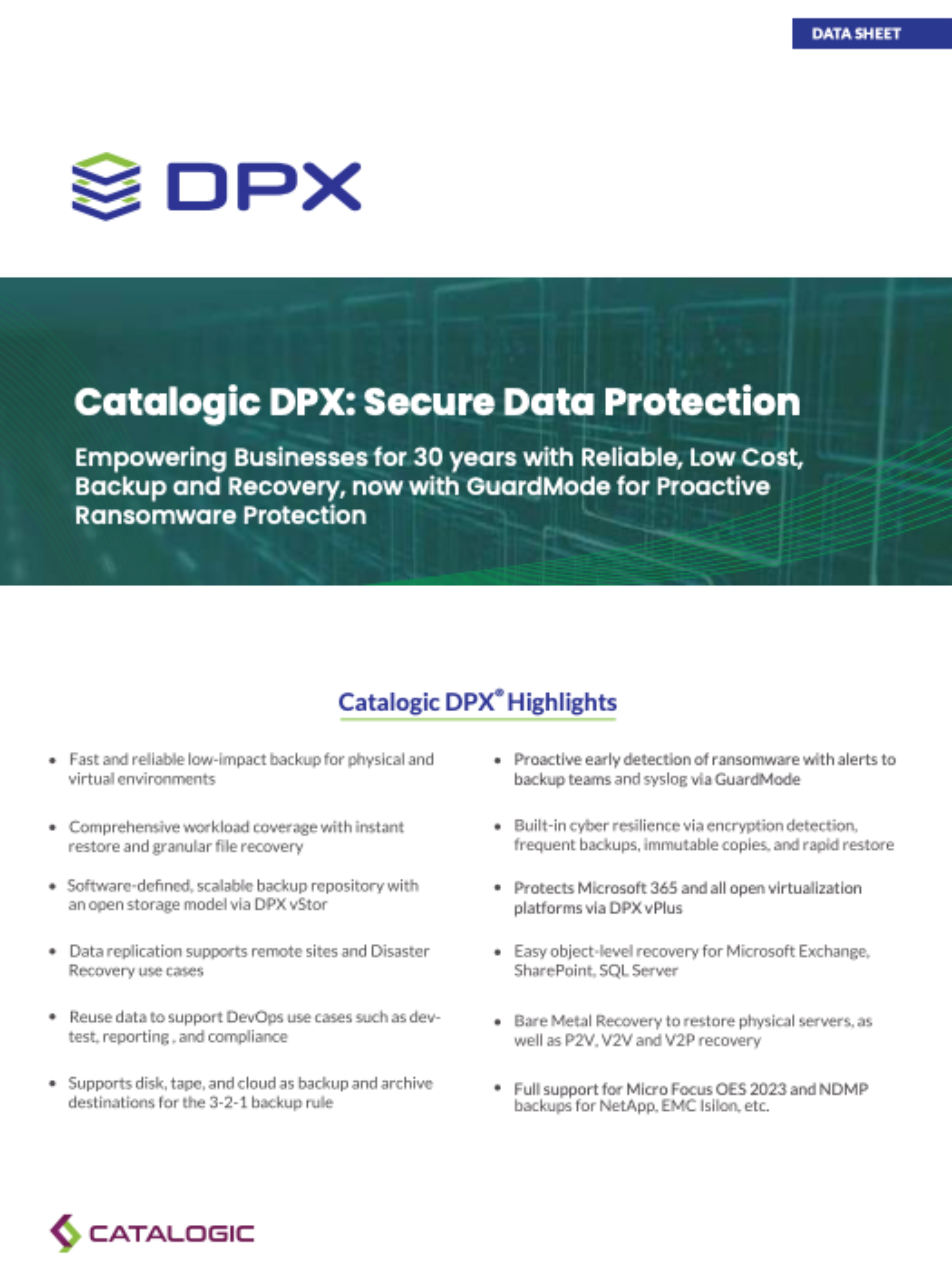
Tape remains valuable in protection designs that prioritize offline isolation, long retention, and cost control.
Once exported and stored offline, tape creates a physical separation that online attackers cannot directly modify.
Tape remains a practical destination for data that must be retained for years but is rarely restored.
Tape can reduce the cost of keeping infrequently accessed recovery points compared with keeping everything on disk.
Learn more about DPX tape support, archival, and data protection.
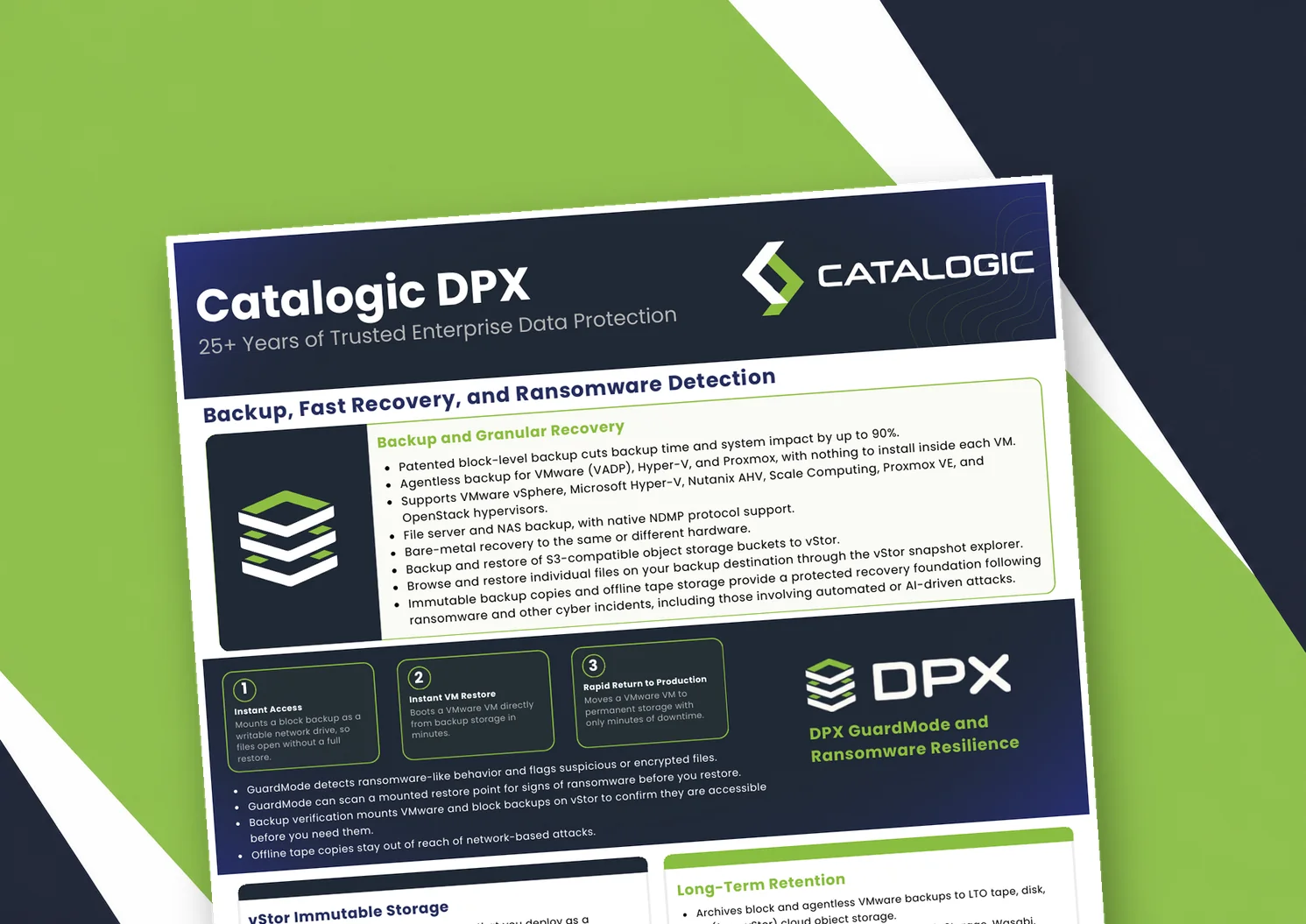
Catalogic DPX product brief: block-level and agentless VM backup, Instant VM Restore, GuardMode ransomware detection, immutable vStor storage, and long-term retention to tape or cloud.
Product brief: DPX adds an independent, S3-connected backup copy on vStor for DataCore Swarm data, with licensing that scales with deployment size to protect partner margin.
DPX 4.16 adds agentless Proxmox VE backup to Catalogic's enterprise data protection platform, giving mixed VMware, Hyper-V, and Proxmox estates a single console for backup, recovery, and ransomware resilience.
See how DPX tape support can strengthen long-term retention and ransomware resilience.
Request Demo