

Catalogic Software

DPX feature

Modern Hypervisor Protection

Back up VMware, Microsoft Hyper-V and Proxmox VE in one platform. Catalogic DPX provides agentless VM protection, so your team has fewer backup agents to deploy and maintain as your environment grows.
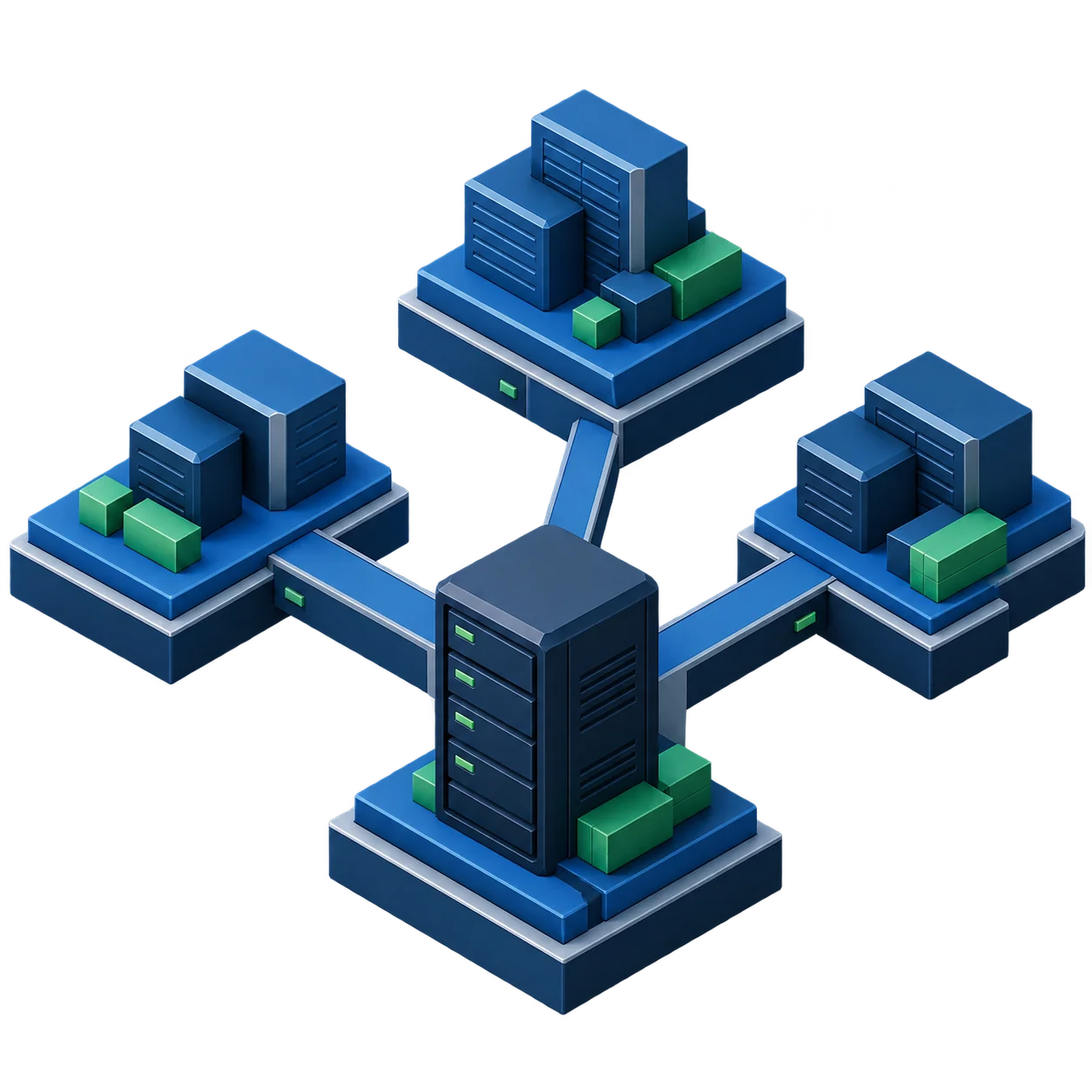
Catalogic DPX modern hypervisor protection for VMware, Hyper-V, and Proxmox VE

One platform as your virtual estate changes

Keep using DPX as you add VMs or introduce another supported hypervisor. Manage VM backup alongside your other workloads, with scheduling and recovery in the DPX web interface. Agentless protection reduces the work of deploying and maintaining backup software inside individual guests.

DPX agentless backup for VMware via VADP, Hyper-V via a host agent, and Proxmox VE via an API and host plugin

Efficient agentless backup as your VM estate grows

Protect your virtual estate with fewer guest agents to maintain and backup jobs you can manage centrally. DPX adapts protection to each hypervisor, helping you control backup windows and storage use.

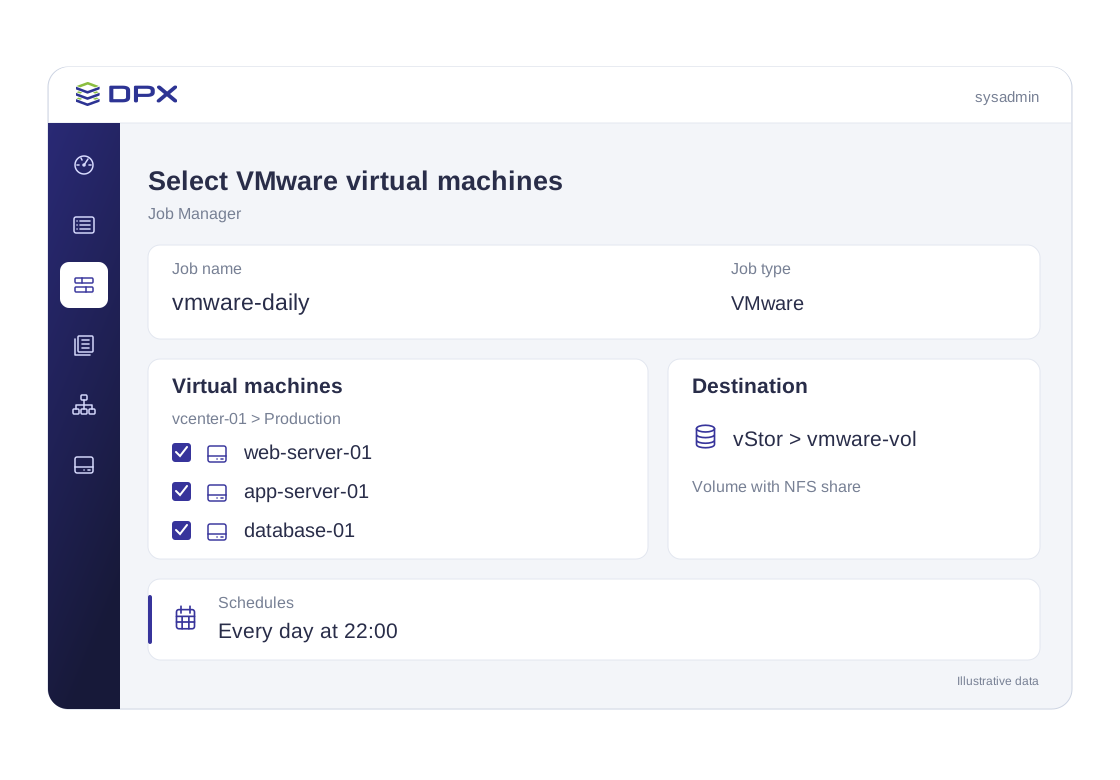
Agentless virtual machine backup

Less software to maintain

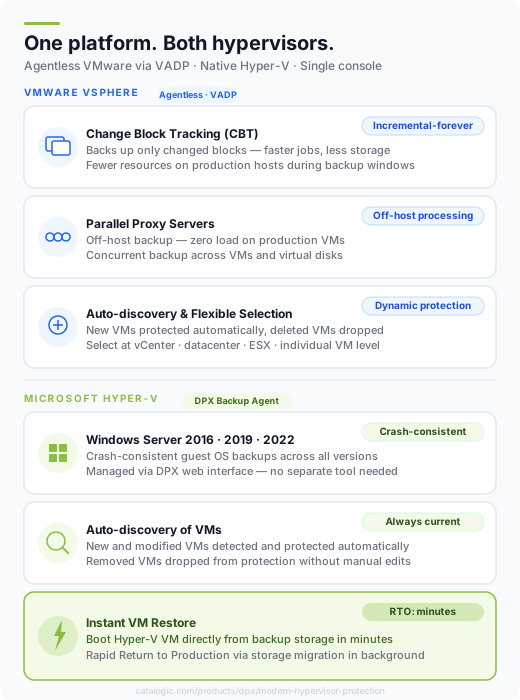
Protect supported VMs without installing a backup agent in each guest. DPX uses hypervisor-specific proxies or host components, giving your team fewer guest agents to deploy and patch.

Incremental VM backup data transfer

Transfer less backup data

VMware uses Changed Block Tracking (CBT), while Proxmox uses its own change tracking. After a base backup, DPX transfers changed blocks while valid tracking is available, helping reduce backup traffic.

Backup capacity across a growing virtual estate

Scale protection across your estate

Run VMware backup work in parallel across DPX proxy servers as VM counts grow. A Proxmox backup job can span multiple clusters, helping keep protection organized across a larger estate.

Automatic VM discovery and protection

Coverage that follows new VMs

Select broader source groups to bring newly added VMs into backup scope. VMware and Hyper-V discover new and modified VMs; Proxmox jobs include new VMs beneath a selected parent on the next run.

Group and individual VM backup selection

Protect groups or individual VMs

Protect whole source groups or choose individual VMs to match your backup policies. Select VMware inventory groups, Hyper-V hosts or Proxmox parent sources, then focus jobs where needed.

Deduplication and compression

Make storage capacity go further

Store supported hypervisor backups on vStor, where deduplication and compression reduce repository space. VMware backups can also use NetApp storage.

Agentless VMware backup and recovery

Recover a missing file, an individual virtual disk or a complete VMware VM. DPX lets you choose the restore that fits the incident.

  • Restore a complete VM to its original or an alternate ESXi host through a guided recovery workflow.
  • Recover an individual VMDK when you need a virtual disk rather than the whole machine.
  • Retrieve selected files from supported VM filesystems backed up to vStor.
  • Use Instant VM Restore to start a VMware VM from a backup snapshot while you prepare its return to production.
VMware

Simplify Hyper-V protection with agentless backup

Protect Hyper-V VMs without deploying a backup agent inside each guest. DPX uses its Hyper-V Backup Agent on the host, reducing per-VM maintenance as you add virtual machines. Manage backup and recovery through the DPX web interface.

  • Schedule VM backups centrally in DPX.
  • Discover new and modified VMs through the Hyper-V host.
  • Restore a complete VM to a selected Hyper-V host.
  • Retrieve files from supported VM backups stored on vStor.
Microsoft

Agentless backup for Proxmox VE

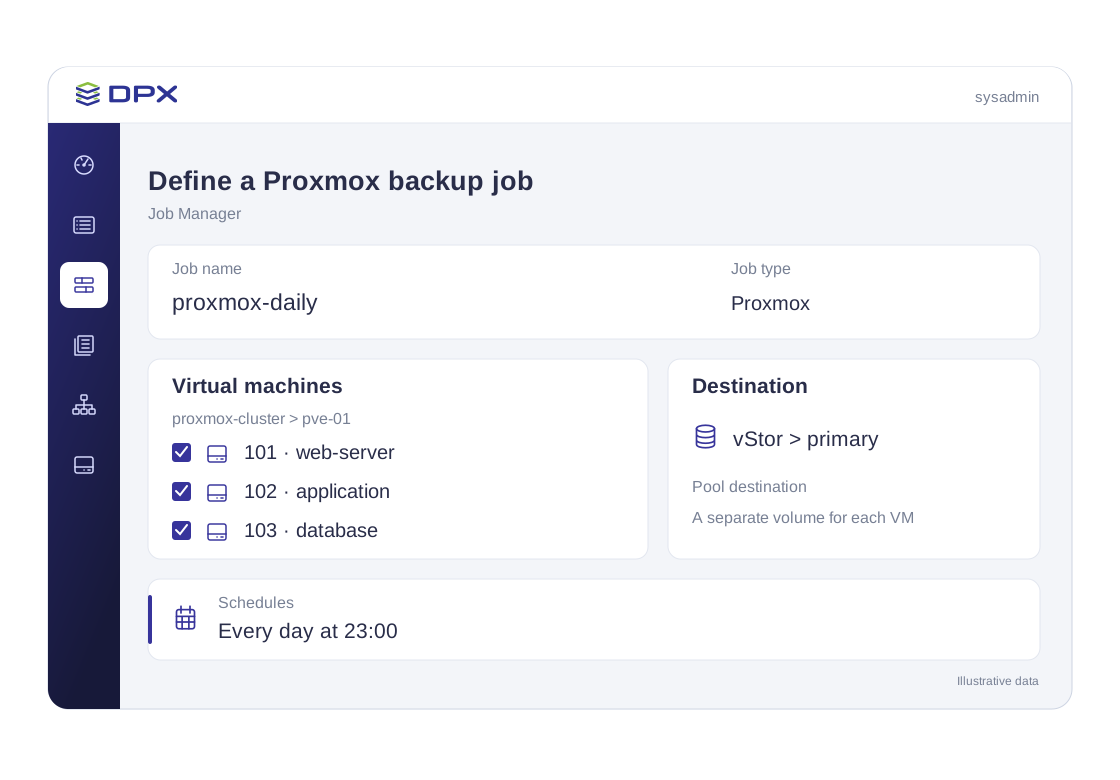
Extend your DPX protection to Proxmox QEMU virtual machines. Backup uses the Proxmox API and a DPX host plugin, so there is no backup software to maintain inside guests. Store recovery points on vStor and manage backup and restore in the DPX web interface alongside your existing VM protection.

  • Keep guest maintenance down with agentless QEMU VM protection.
  • Reduce backup data transfer with incrementals after the base backup, when valid change tracking is available.
  • Protect VMs across multiple Proxmox clusters in one backup job.
  • Restore selected VMs from retained recovery points in the DPX web interface.
Proxmox

Recover what you need from agentless backups

Recover a complete workload or just the files that are missing. DPX provides full VM restore across supported hypervisors, with additional recovery options for VMware and Hyper-V to match the incident.

  • Restore complete VMs from retained recovery points in supported VMware, Hyper-V and Proxmox environments.
  • Retrieve individual files from supported VMware and Hyper-V backups on vStor, without copying back the entire VM.
  • Start a VMware VM directly from a backup snapshot with Instant VM Restore. The recovered VM accepts changes while the original backup stays intact.
  • Move the running VMware VM to permanent storage with Rapid Return to Production using Storage vMotion.
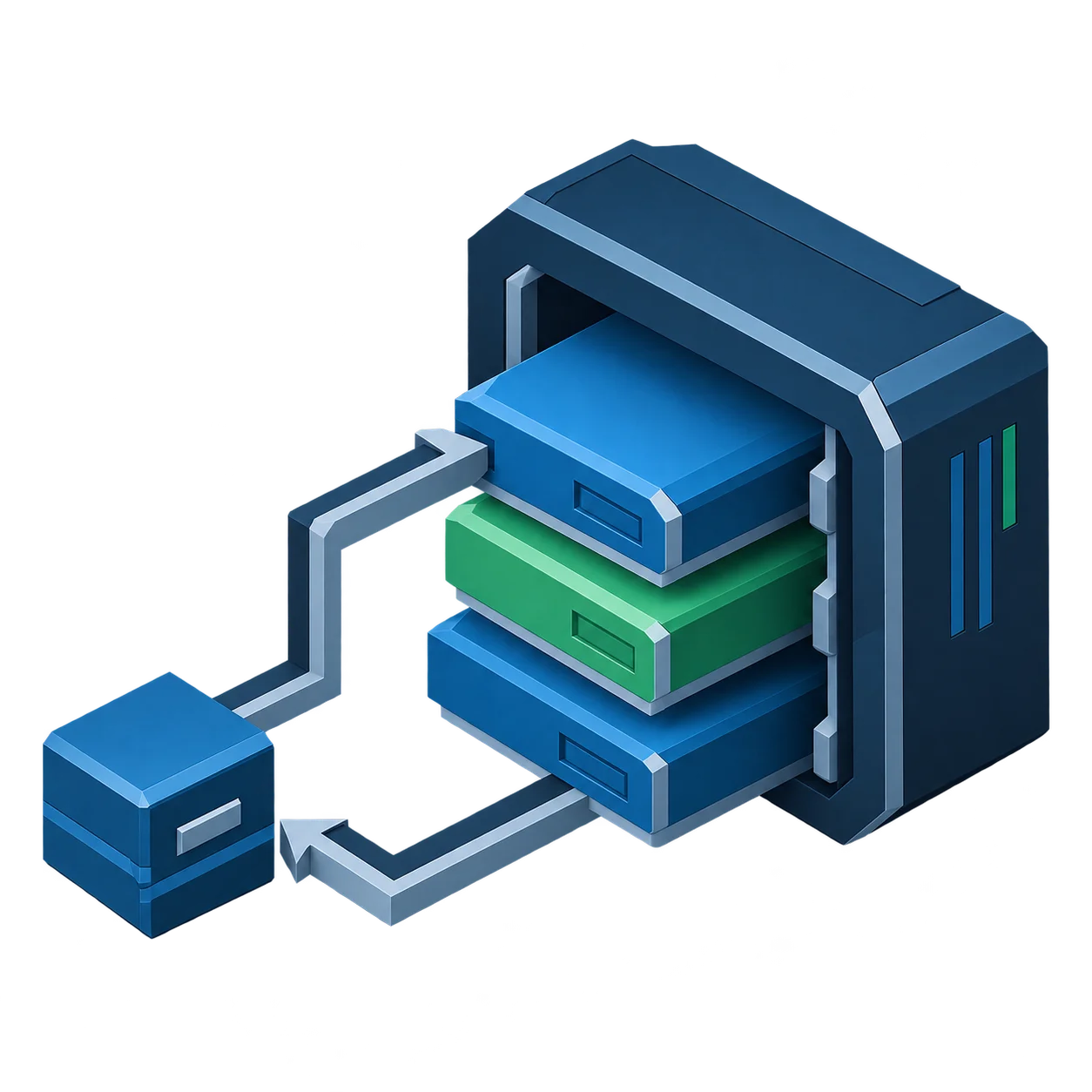
VM and file recovery from DPX agentless backups

Keep recovery points ready when you need them

Hypervisor backups that resist ransomware

Keep recovery points available when production systems are compromised. Immutable vStor storage protects retained snapshots against modification and deletion when deletion locks are configured.
GuardMode scans supported mounted snapshot filesystems for signs of ransomware, helping your team assess a recovery point before putting it back into service. See how this supports cyber-resilient recovery.

Storage that fits your virtual estate

Bring your hypervisor recovery points together on vStor and use deduplication and compression to make better use of storage capacity. VMware backups can also use NetApp storage.
Keep VMware recovery points for longer with DPX Archive, using cloud storage from vStor or archiving to tape. See long-term retention and archival for the available options.

Why teams choose DPX for hypervisor protection

Less day-to-day administration

Agentless VM backup gives your team fewer guest backup agents to deploy and maintain as VM counts grow.

Keep backup management together

Add another supported hypervisor while keeping backup management alongside your existing server, application and NAS protection.

Recovery at the right scale

Restore a full VM when an entire workload is affected, or retrieve selected files from supported VMware and Hyper-V backups on vStor.

Hypervisor backup FAQs

Which hypervisors does DPX protect?
DPX provides agentless VM backup for VMware vSphere, Microsoft Hyper-V and Proxmox VE. You can keep these environments in one backup platform as your hypervisor mix changes. Check the DPX compatibility matrix for supported versions.
Is Hyper-V backup agentless if it uses a host agent?
Yes. Agentless describes protection without a backup agent inside each guest VM. DPX installs its Hyper-V Backup Agent on the host to handle snapshot processing and communication with backup storage. This differs from guest-level block protection, which requires the DPX Client inside the VM. See the Hyper-V backup guide.
Does VMware backup use Changed Block Tracking?
Yes. DPX uses VMware Changed Block Tracking (CBT) to transfer changed blocks after the initial base backup. Backup reads use VADP through DPX proxy servers. See how agentless VMware backup works.
Which hypervisors support Instant VM Restore?
VMware supports Instant VM Restore, letting you start a VM from its backup snapshot before completing a full data copy. Rapid Return to Production uses Storage vMotion to move it to permanent storage and requires appropriate vSphere licensing. Hyper-V provides full VM restore; Proxmox provides Proxmox Restore. See DPX rapid recovery for VMware options.
Can I recover a single file from a VM backup?
DPX provides agentless file restore for VMware and Hyper-V backups stored on vStor. You can retrieve selected files or directories without restoring the whole VM. ReFS and Btrfs filesystems, and LVM-managed volumes, are excluded from this workflow. Individual VMDK recovery is a separate VMware option.
How are my VM backups protected from ransomware?
vStor deletion locks protect retained recovery points against modification and deletion. MFA is required to configure locks, and fixed protection stays in place until its retention period expires. GuardMode Scan checks supported mounted filesystems for signs of ransomware before recovery, helping you evaluate a restore point. Review scan results and test recovery as part of your cyber-resilient recovery process.
What does Proxmox VE backup cover?
DPX protects QEMU virtual machines through the Proxmox API and a DPX host plugin, with vStor as the backup destination. LXC containers are not supported by this workflow. RAW and VMDK disks lose change tracking after a power-off or restart, so their next backup is a base backup; QCOW2 tracking persists. See the Proxmox backup guide for setup and supported disk formats.
Can I archive every type of VM backup to cloud or tape?
DPX Archive supports block backups and agentless VMware backups. Agentless Hyper-V and Proxmox backups are not supported by this archive workflow. For VMware cloud archival, the source repository must be vStor. Talk with our team about the retention requirements for your hypervisor environment.

Related DPX resources

Learn more about hypervisor protection and data protection with Catalogic DPX.

Catalogic DPX Product Brief

Catalogic DPX Product Brief

Catalogic DPX product brief: block-level and agentless VM backup, Instant VM Restore, GuardMode ransomware detection, immutable vStor storage, and long-term retention to tape or cloud.

DPX for DataCore Swarm

DPX for DataCore Swarm

Product brief: DPX adds an independent, S3-connected backup copy on vStor for DataCore Swarm data, with licensing that scales with deployment size to protect partner margin.

Protect VMware, Hyper-V, and Proxmox with DPX

See DPX backup and recovery for the hypervisors you use. Book a demo with our team to discuss your VM workloads and recovery requirements.

Request Demo