


Continuity
Keep important OES file services protected while broader modernization projects continue.
DPX use case

OpenText Open Enterprise Server environments often contain long-running file services, user data, and operational history that cannot be casually migrated or ignored. DPX gives those environments a supported protection path. The current DPX compatibility guide lists OpenText Open Enterprise Server 2018, 2018 SP1 through SP3, and 2023, with available features including Device or SAN Device Server, file-level backup, and NDMP Proxy. That matters for teams that need to protect OES while keeping the rest of the backup estate on the same DPX platform.
DPX helps protect OES systems without isolating them from the rest of the enterprise recovery plan:
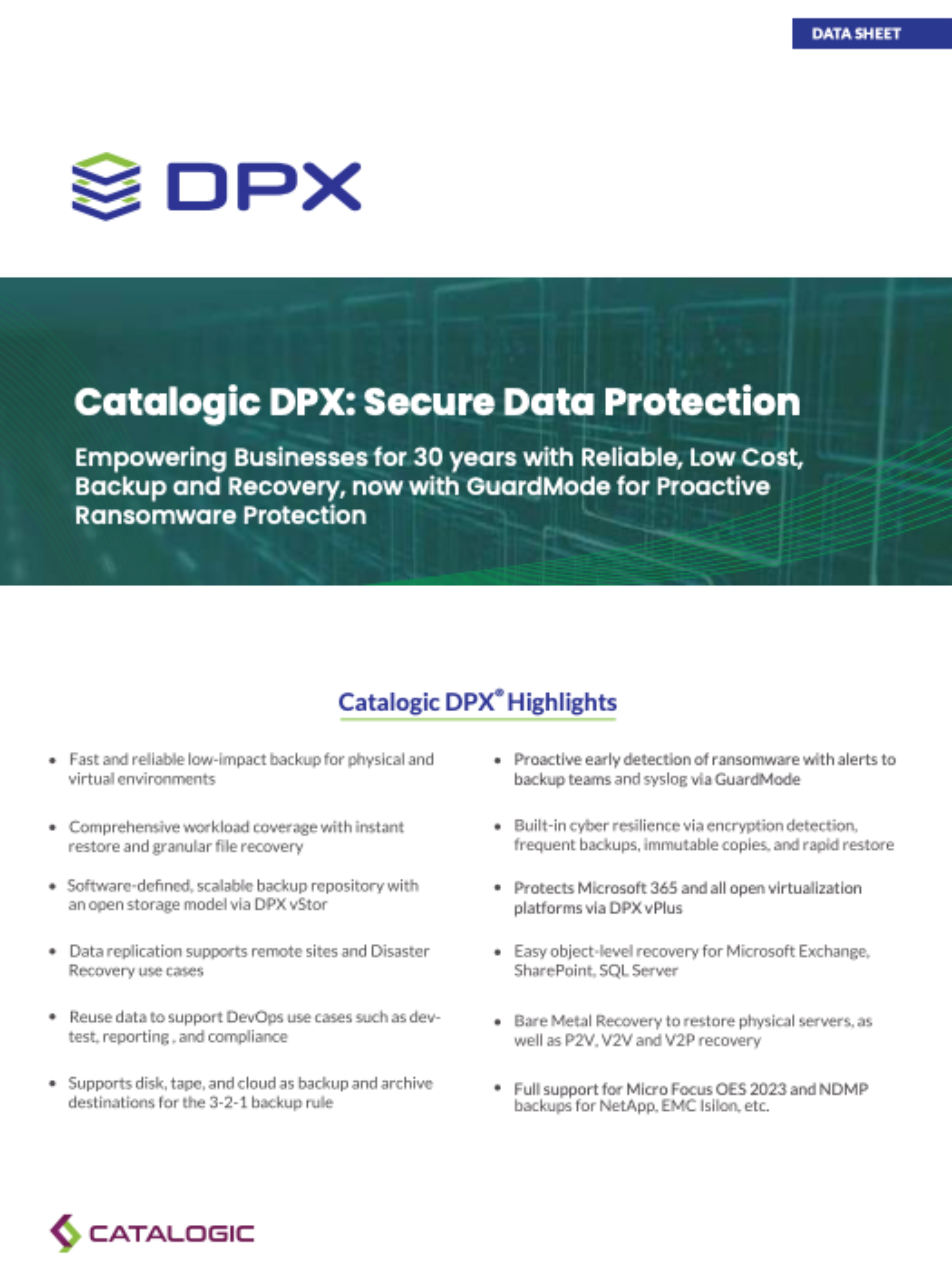
Older and specialized platforms often become risk points when backup tools stop treating them as first-class workloads.
Keep important OES file services protected while broader modernization projects continue.
Use DPX policies, retention, reporting, and restore planning instead of a separate niche backup process.
Connect OES protection with NDMP and NAS-focused workflows where file storage architecture requires it, while keeping recovery planning inside DPX.
Learn more about OES, NAS, and DPX data protection.
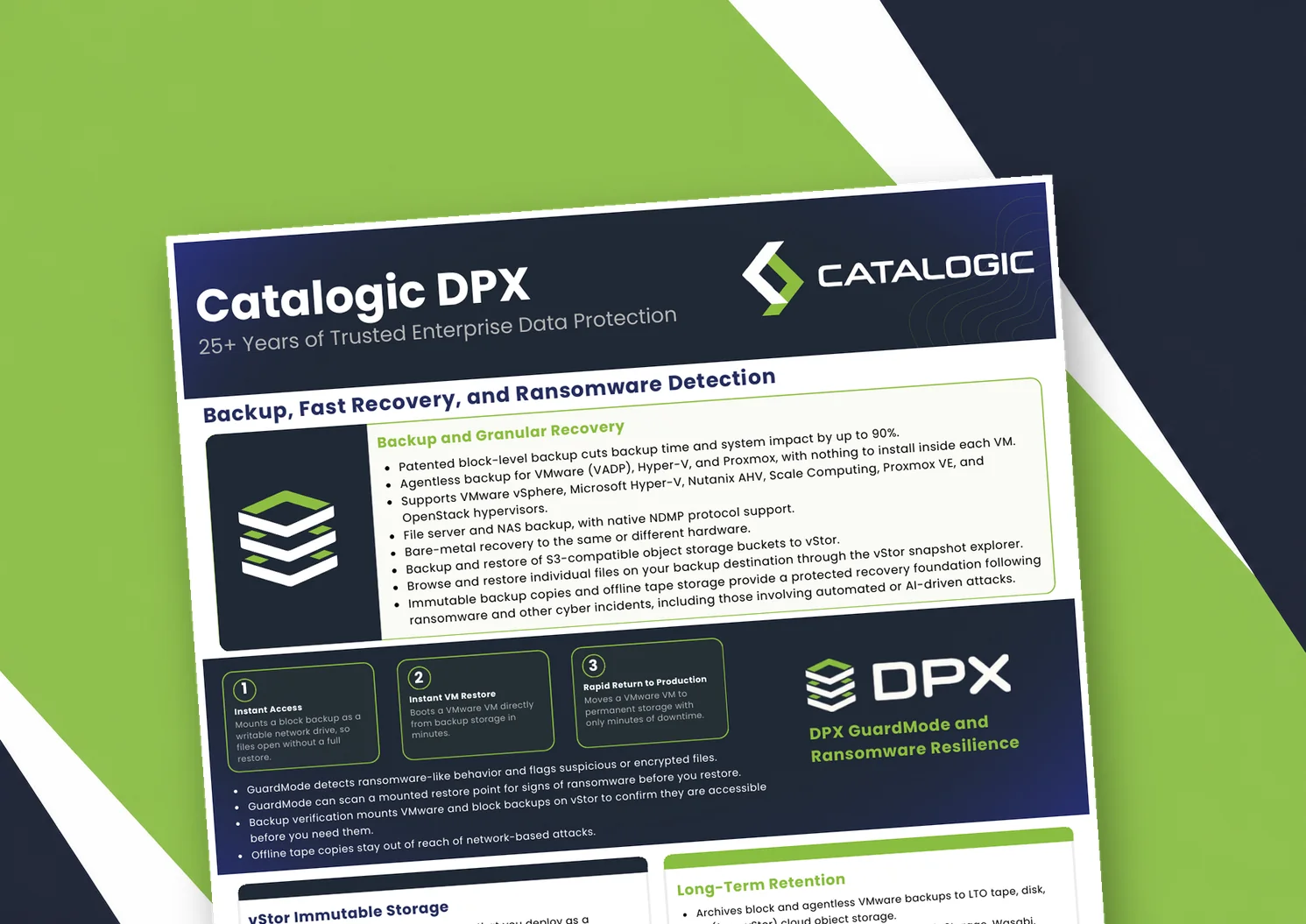
Catalogic DPX product brief: block-level and agentless VM backup, Instant VM Restore, GuardMode ransomware detection, immutable vStor storage, and long-term retention to tape or cloud.
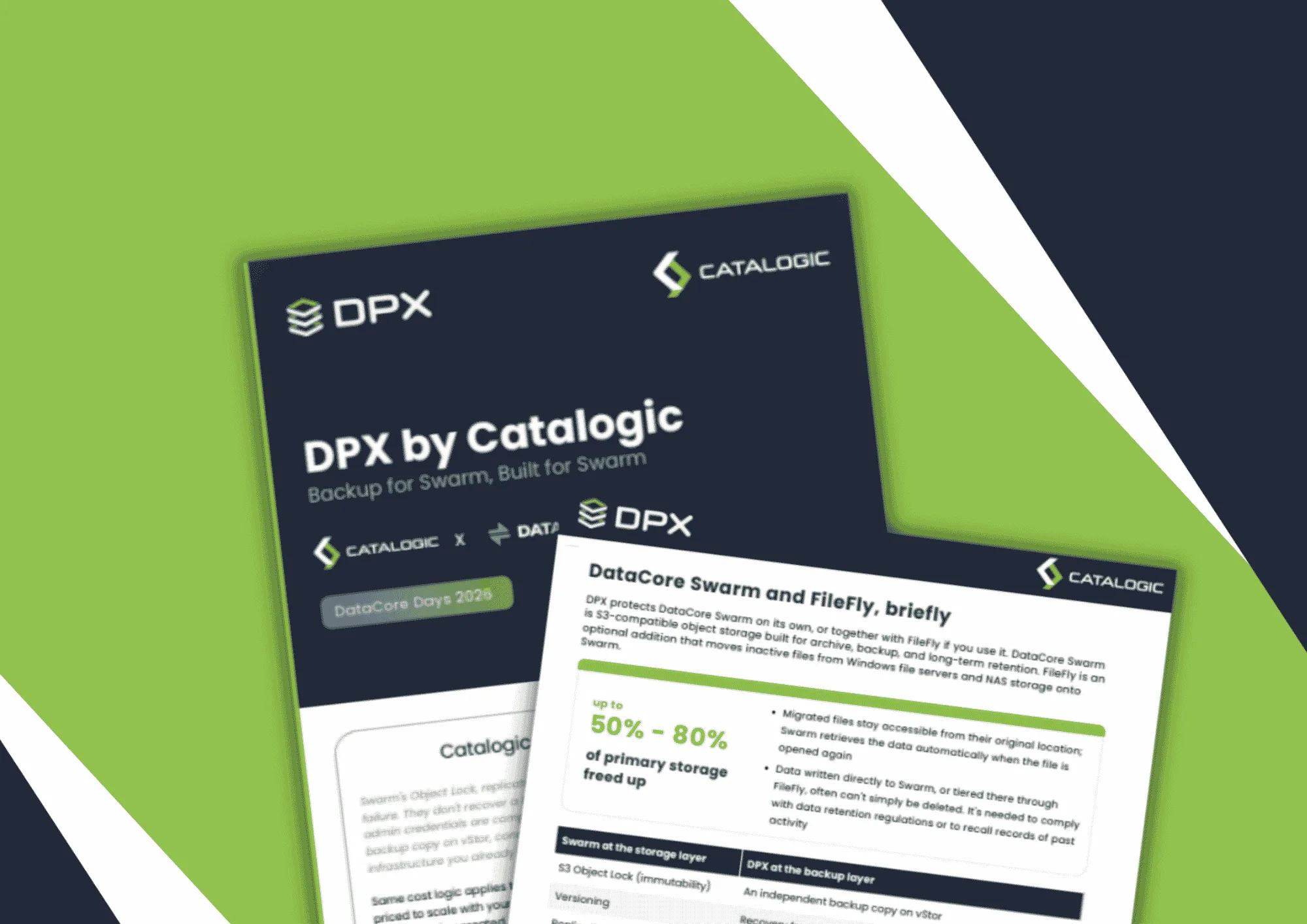
Product brief: DPX adds an independent, S3-connected backup copy on vStor for DataCore Swarm data, with licensing that scales with deployment size to protect partner margin.
DPX 4.16 adds agentless Proxmox VE backup to Catalogic's enterprise data protection platform, giving mixed VMware, Hyper-V, and Proxmox estates a single console for backup, recovery, and ransomware resilience.
See how DPX can protect supported OpenText OES environments as part of your enterprise backup strategy, with practical planning for legacy and current file services.
Request Demo